Showing posts with label habits. Show all posts

Sunday

Crafty-crafts

Corn husks, twine, & fabric scraps make autumn decorations,
and step-by-step, they build attention spans in the group, too. 


The handicrafts we make in our home tend to be more crafty than handy.

CM advises that handicrafts should be useful, and our crafts in my family often fall short of that standard, unless you count fun and decorative as useful.

Even so, I see plenty of usefulness in crafty-crafting.

I've been using crafts with a group of kids at my church, either in Sunday School class with the lessons or during Quiet Time just for fun.

The kids in my group are highly spirited. That's the correct term, right? Maybe rowdy would be more accurate, if not as gentle. They are eager, really eager, to work on crafts, but honestly, they lack the listening skills, attention spans, and confidence in their coordination to do much on their own beyond using coloring books. I don't think most of them have had much experience with crafting, but that's all the more reason to begin.

So, we've been working on crafts together, some easy, some more challenging. Here's what I'm noticing about crafty work:

  • Attention spans grow! They really do.
    In a group setting, the time restrictions force me to plan short projects. The kids are learning, week after week, to keep up their attention for our entire time together, knowing it will take our full session to complete a project. This is slow progress for some children, but it's progress I'm most definitely seeing
  • Fine-motor skills improve with practice.
    No big surprise there, but I think the kids surprise themselves what they can do. The trick is learning not to rush, and slowing down seems harder to learn than the actual fine-motor skill.
  • Kindness happens.
    I've heard that Amish people use group projects like raising a barn or making a quilt not only to raise a barn and make a quilt, but to provide a social outlet for people. They understand that with a specific task on hand that requires focus and work, those bothersome personality quirks of others are easier to tolerate and ignore.

    I have found this to be true in our spirited group. When not engaged in a craft or chore that requires attention and some effort, the kids pester each other, provoke each other, jostle, tease, and poke

    When the craft captures them, they get along. It's a miracle, I want to shout! I've heard unsolicited compliments and I've seen unprompted sharing during an intense crafting time. No reminders from me about behavior are needed during those magical moments. 
  • Patience takes patience.
    One of the hardest things for the kids to do is to listen to instructions. They want to jump to the last step immediately. By crafting, you learn that things are constructed in a certain order. You have to build up to the last step. The kids are learning patience because they want their finished project to look good, and I'm learning patience in presenting the project in a way that makes sense to them.
  • Accomplishment feels good.
    I notice busy-work like coloring-book pages are cast aside, dropped, forgotten. But a project that challenged their minds and hands is like a friend they made and want to keep. 
It's really fun for me to use some CM ideas with kids other than my own in my home. My sessions with the group are not pure CM, I know that, but I do think about things like making short lessons, creating a pleasant atmosphere for learning, setting high standards, resisting prattling and over-explaining.

The kids have made progress over these months, but I suspect I'm the one who is learning more. That's a sign to me that I'm on the right track when I realize that just when I think I'm the leader, I see that I am, in fact, being led. 

Today's gratitude is the handiness of making crafts.


Monday

Easy and not easy: baking bread

This morning I had homemade Irish soda bread and strawberry jam for breakfast. I'd show you a picture, but I already ate it up.

My daughter decided a couple of months ago to bake a fresh loaf of bread once a week, and she's been keeping up the habit. Each week she picks a different recipe to try, and some varieties we've enjoyed are onion buns, Russian black bread, focaccia, braided challah, and this week, a quick Irish soda bread.

She's gone from someone who wants to bake bread to someone who does bake bread. Each week she tells me she learned something new, either about ingredients, techniques, storage, or how to handle our less-than-perfect oven. She told me, "Mom, it's so easy!"

Yes, it's easy and it's also not easy. There are plenty of reasons why a bread-baking habit is difficult in modern big-city life, but she made the habit easy on herself when she decided to try one loaf a week, and she made it easy on herself by creating an enjoyable environment.

I doubt she purposely said, "I'm going to create an atmosphere for success," but that's what her actions did. She picks her recipe in advance and shops for any missing items. On baking day, she wakes up early to have the kitchen to herself (we have a tiny kitchen), she plays music she enjoys, and she wears an adorable apron (a key to success in the kitchen is a cute apron, of course!)

She didn't try to keep the family in a constant supply of freshly baked bread, though her family would certainly enjoy that, but sticks to one loaf a week that she looks forward to baking. Slow and steady, she has become a bread baker who knows what she's doing and who wants to learn  more.

Hmmm...slow habit development, encouraging atmophere, sound familiar to Charlotte Mason fans? Of course, you don't need to read and follow Charlotte Mason to bake bread once a week, but it does seem me that a CM lifestyle had some influence here.


Tuesday

Another kind of constipation

I heard a new phrase the other day, and though the phrase was new to me, I knew immediately what it meant and how it felt. 

My neighbor mentioned to me that he had "creative constipation." It's not the most elegant of phrases, but definitely descriptive. 

Sketched while waiting outside my kids' capoeira class.
I know what it feels like to suffer creative constipation. It's uncomfortable! I think Charlotte Mason understood the feeling, too, and that's why she included nature study, nature journals, living books, poetry, artist study, composer study, handicrafts, and mother culture in her curriculum. These pursuits matter, they are important, and you could even say they are essential for a healthy (un-constipated) life.

The cure for creative constipation is easy, fortunately, and the remedy works instantaneously. All you have to do is do something creative or immerse yourself - for awhile, at least - in the creative work of others. For me, the best cure is working on my nature journal. Reading scripture also is a top cure, as the words in the Bible tap me into God's creation. Working on a craft with my hands, putting effort into making a meal, sitting outdoors and observing what is happening around me, listening to beautiful music, reading literature, looking at artwork and thinking about it....all these things provide relief to creative constipation. 


I took a break from running errands to sketch flowers in a planter I noticed.

Relieving the constipation (really, I need to find another word as this one is getting off-putting in repetition!), isn't hard and it doesn't take that much time. The remedy, for me, is putting creative work first in my day. Before the day's tasks begin, before breakfast, before taking a shower, if I start my day immediately with something creative, the constipation is cleared. Once I put creative work first by giving it my first hour, it grows like a weed during the day, and I spot opportunity after opportunity to see creation in almost everything. It's truly a miracle how that works.

The day after the conversation with my neighbor about creative constipation, he knocked on my door and handed me a fistful of colored pencils that he had but didn't use. He is into photography more than drawing, and he knew I would put the pencils to use. I told him it was one of the best presents I ever received, and he said that statement was a gift right back to him. What a sappy conversation, I know! But, it reinforces what I believe about creative work - it brings out the best in us and in each other.

Cherry tomatoes from the farmers' market, sketched using pencils my neighbor gave me.

As I write this, I'm also in the midst of putting together next year's homeschooling plan. Despite all the chatter around me about college requirements and testing standards, I'm putting our creative work as top priority with the faith that the energy - and relief -  we receive from it will carry us through the other demands in our lives.


Sunday

Charlotte Mason and the Crazymakers

I saw a young man on the subway platform yesterday carrying the book The Artist's Way under his arm.

I wondered if he thought what I thought when I read the book:

We are surrounded by crazymakers.

The author of The Artist's Way, Julia Cameron, defines a crazymaker in her book, but I define the word in my own way.

My definition of crazymaker: A person who gets between you and your self-confidence and/or who stands in the way of you accomplishing the work you want to do.

As homeschoolers, we're vulnerable to crazymakers who undermine our enthusiasm and decisions.

Examples of crazymaker talk:
  • Are you qualified to homeschool your children?
  • I heard about a lady who homeschooled. She ended up drowning her kids.
  • I read about a homeschooling family. All the kids sailed around the world on boats they made themselves and then went to Ivy League schools before they were teens. So, what do your kids do? 
  • I could never homeschool. I don't have the patience, and my kids like to have friends.
  • Are you home all day? It's abusive to keep kids locked up all the time. 
  • It must be nice to spend afternoons at the park or to go grocery shopping in the morning, but shouldn't your kids be at their desks learning?
  • Only the elite are rich enough to homeschool.  
  • Only the uneducated are dumb enough to homeschool. 
  • Instead of abandoning the school system, homeschoolers should help fix it.
  • Homeschoolers ruin their kids by giving them free rule of every decision. The kids will never make it in the real world.
  • Homeschoolers dictate everything their children think and don't allow the kids any freedom. The kids will never make it in the real world.
  • Homeschoolers are right-wing wackos.
  • Homeschoolers are left-wing nuts. 
  • I would be bored out of my mind if I homeschooled. I didn't go to college just to stay home with my kids. 
  • What about socialization? What about chemistry labs? What about sports? What about your career? What about getting into college? What about cutting the apron strings? What about fitting in? What about algebra? What about prom? What about the real world? What about getting along with peers? What about testing? 
And so on, and so on.
Sometimes we are the crazymakers.

Sad to say, even homeschoolers can be crazymakers with each other. If you feel inadequate or defensive after spending time with other homeschoolers, chances are good there is a crazymaker or two in the group.
  • You use that curriculum? You use curriculum? You don't use curriculum? 
  • My kids taught themselves to read at three years old. All kids are capable of doing that if parents provide the right environment.
  • My child didn't read until after she was 12 years old, and the first thing she read was the encyclopedia from A to Z followed by the entire Harry Potter series in one weekend. Reading at an earlier age is only the result of parental coercion.
  • You might want to know that the snack you just gave your child is poison. We don't eat like that in our family.
Okay, I'm exaggerating, but let's curb the crazytalk in our homeschooling community.

Charlotte Mason has advice.

Charlotte didn't use the term crazymaker in her writing, but even so, she did offer a way for us to deal with crazymakers.

If you're familiar with Charlotte, you know what I'm talking about when I say Mother Culture. For those who don't know, Charlotte urges mothers to constantly keep learning, and creating, and exposing ourselves to new ideas - just like we encourage our children to do. By nourishing our own growth, we keep crazymakers at bay. It's not 100% effective, but it's very good.

When you spend time with your own hobbies, think about new ideas, breathe fresh air, visit new places, read good books, you gain perspective. Then, when a crazymaker starts doing the crazy-making things that crazymakers do, you'll recognize the antics for what they are and either avoid them or patiently tolerate them without offense. When you are filled up with Mother Culture, you have it within you to do that.

The tricky bit with Mother Culture is that it requires self-motivation and self-discipline. You can't wait for your husband or child or anyone else to say, "Take care of yourself." Take care of yourself on your own like the big girl that you are.

What eventually happens is not only do you reap the benefit of whatever you're doing for Mother Culture, but you hone those good habits of self-motivation and self-discipline. You will become fulfilled and strong, attributes that are antidotes against crazymakers.

Not only that, but by learning new things, you'll become flexible. In my opinion, flexibility helps us from becoming offended by opinions that differ from our own. And, it might make us open enough to consider a differing opinion and change our minds once in awhile. After all, sometimes a person isn't a crazymaker but someone who is simply different than ourselves. If we're willing, we might even learn something new by being challenged, as crazy as that sounds.


(For people who have read The Artist's Way: I happen to think Charlotte Mason's idea of Mother Culture is very similar to Julia Cameron's idea of Artist Dates. Do you see the similarities?)

Friday

No way will we stay inside

My kids woke up before I did this morning, and I heard them talking outside my door.

"It's almost 40 degrees already," I heard my son say to his sister. "No way will we stay inside."

I got up, fixed my coffee, and set the kids up with their math assignments. As soon as they were finished, we headed to a park in the neighborhood.


On our walk to the park and on our walk through the park, seeing early signs of spring, the kids talked about memories of past spring times.

By now, they know what flowers will be the first to bloom, and they looked for them today and predicted  what flowers will appear next. We noticed the robins are starting to arrive, but the mockingbirds aren't here yet.  We heard a blue jay hollering at someone and saw the resident woodchuck scurry down his (her?) burrow.


When we sat on the park's lawn to work on our drawings, my daughter said, "Remember when we used to play here?"

I suppressed a laugh because it wasn't that long ago that the kids played on the lawn. In fact, they played on the lawn today! But I knew what she meant. The kids have been playing on that lawn since they were babies.


As they kids reminisced like a pair of old grandparents, it occurred to me for the first time that the habit of being outside together prolongs that wonder-filled time of childhood. Time out doors seems to last longer than regular time - it lasts longer in the moment, and it lasts for a lifetime in memories.
You are told a lot about your education, but some beautiful, sacred memory, preserved since childhood, is perhaps the best education of all. Fyodor Dostoevski 

We did it, for a minute

The last time we drew in our nature journals, it was autumn and the leaves were changing. It's late January now, and the trees are bare. As hard as it is to get into habits, it's equally as easy to fall out of them.

I've been wanting to read Winter Buds by Bette J. Davis with my kids for a few years. It's a miracle I remembered I had the book on my shelf, but my memory was prompted by a blog post at Handbook of Nature Study about studying twigs in winter. 


Before heading out the door today with our journals, we read the first couple of short chapters in Winter Buds to give us some ideas what to look for on winter twigs. 

It started to rain just as walked outside today, but the spot where we wanted to go was nearby so we ventured forth. Even so, we didn't last long at our journaling since it was tricky to draw with rain falling on our pages, but we stuck it out as long as we could with wet paper and cold fingers. We sketched what we saw and then completed the pages at home.

My page, first day of the bud study project.

Once I get out of the habit of working on our journals, the project grows in complexity in my mind and I convince myself we don't have time it. Or, just as likely, I forget about our journals. 

But the thing is, when I plunge back in, I remember that even a few moments is often all it takes to kick us back into the routine. I remember it's not complicated to notice nature around us, and when it comes to drawing, a quick sketch can be enough. 

I don't know why I have to learn the lesson over and over again, but making the time to work on our journals somehow extends the time we have for the rest of the day. Everyone is usually in a good mood after we work on our journals - whether the mood is from being outside, from being creative on our pages, or from being away from the gadgets that grab our gaze, I don't know.

We took the advice of tying a string on the twigs we each drew to help us find the same twigs again. That may have been the favorite part of our trek today - tying red thread on a twig with plans to visit another time. 
 

Wednesday

Habits: I know what's for lunch on Tuesdays

We walked to the farmers' market this morning.


We walk past this building on our route, and it always makes me smile. I love the color in the otherwise gray block. I wonder if the super of the building found some extra paint in the basement one day and said to himself, "What the the heck, I'll paint the first story bright yellow with orange stripes."


I heard that 80% of the small farmers who sell at the markets have crops damaged or ruined by Hurricane Irene. Buying produce at the markets is a way to help local farmers, and I especially wanted to do this since Manhattan was spared from the storm. I've noticed the amount of produce dropped over the past few weeks, when you'd expect overflowing tables this time of year.

I did find apples, grapes, peppers, onions, garlic (really great garlic!), watermelon, and donuts. We were glad the donuts were spared from the floods.

But the best part was when, at the end of the line of stalls, we saw a new vendor with a table full of beautiful loaves of bread. I sent my daughter ahead to see what was for sale, with instructions to buy whatever looked best to her. She ran back, insisting I look for myself.

We couldn't decide what to get and finally selected two loaves. There was a variety of delicious-looking focaccia, and we each picked out one.

I've been working on meal planning for the past few weeks, and when I saw the focaccia, my mind erased the lunches I had planned for Tuesdays and replaced them with items from the new vendor. Next week I want the bread stuffed with mozzerella and spinach.

I said to the man behind the tables, "See you next week!" and he said, "Here, take a free shopping bag!" I put in the bread items and handed the bag to my son, and he swung it all the way home while reminding me he had money to spend.


We stopped here for my son to buy a comic book (a.k.a. twaddle) because if you're going to eat a donut from the market for breakfast, you might as well read the comics while you're at it.

For lunch, we ate the focaccia along with a fruit salad and a bit of leftovers from yesterday. For dinner I made potato and kale soup and served it with the pumpernickel bread we bought today.

I've dropped and picked up the meal planning habit several times over the years. I used to think that meal planning meant I had to make every single thing from scratch. But meal planning doesn't mean churning my own butter or grinding my own wheat, but simply that I know what I'm going to serve and do the prep work to make it happen.

On Tuesdays, my prep work is walking in the morning to the market. I think it's a habit I'll be able to keep, at least until the outdoor markets close for the winter.

By then, it will be time for a change anyway.

Thursday

Observe: math and more

Forget the idea that math people aren't friendly people.

I was in the company of an entire room full of math people tonight at a lecture, and while I couldn't understand the mathy conversations I heard while mingling in the crowd, everyone was all smiles, laughter, and friendliness, even the woman sitting next to me who said, "What did he say?!" every time the crowd laughed at the speaker's jokes.

Some goodies awaited us a the lecture, including a pinecone.

My daughter and I have gone to history and literature lectures together, but this was our first venture into the math world. You know what was the first difference I noticed between the mathy world and the wordy world? The math people serve food.

Perhaps I shouldn't be surprised, but I am, at how much fun we had. Fun with math! Who would've figured that. (Get it?...figured, math.)

On our way to the math event. Rain, again.

The topic of the math lecture was the Golden Ratio and the Fibonacci Sequence (and the myths and facts about them). Fibonacci is what caught my eye and gave me the courage to attend a math event. I knew about the sequence and understood the math.
1, 1, 2, 3, 5, 8, 13, 21...
In the pattern, you add two consecutive numbers 
to the get next number in the sequence.

And I knew about spirals in nature that follow this pattern, but I never could really SEE them. 

Sketching notes in my nature journal last spring.
I was trying to see the spirals I knew where there.

I've attempted to draw pinecones many times, only to get lost. I knew spirals were there to be found, but my brain didn't recognize them. 

When I saw pinecones on each person's chair when I entered the math lecture-hall tonight, my heart sang. I was hopeful by the end of the night, I would see spirals. And, I did.

My daughter and I counted the spirals going one way on the pinecone and found eight. We counted the spirals going the other way and found 13. Eight and 13 are numbers in the Fibonacci Sequence. Whoohoo!

And there is more
As delighted as I was, the pinecone wasn't the highlight of the lecture's lessons for me. The speaker talked about the importance of observing and looking (sound familiar, CM fans?), but went on to say we also need to look for explanations, and to not assume other people's explanations are right. We need to think for ourselves.

I didn't think about observation like that before, but I'm seeing that one step of observation is to say, "I see," and another step is to say, "I see why." 

This is a huge challenge. A huge delight, too. For me, this is a new way of thinking about Charlotte's idea of observation.

Now that I think about it, perhaps this second step is what makes math people happy. They are in the habit of observing and then observing more.

Wednesday

Can't kick the back-to-school habit

Even though we homeschool year-round, the Tuesday after Labor Day begins the school year in my mind. That's the date when school started for me when I was a kid, and that's the date that will forever be, for me, the First Day of School.

I feel energetic and enthusiastic this time of year, eager to be organized. I spent some time last weekend making plans for our back-to-school season, and today was Day 1.


We have a farmers' market not far from our place, and that's where we headed, in the rain, after breakfast this morning.

One of the farmers asked my kids when school started for them. "We homeschool," my kids said, but I said, "Today. Today is the first day of school."

"It is?" said my kids.

"Yes," I said, "it is." I forgot to tell them, but who needs to be told the Tuesday after Labor Day is the first day of school? Then again, even the public schools around here don't know because they don't start classes until Thursday.

The rest of the morning went like this:
* Ate donuts from the market. Made more coffee for me.
* 10-minute tidy in bedrooms.
* Math. I cleaned produce from the market while the kids each worked on their math problems.
* Another 10-minute tidy of area of their choice. My son re-arranged fishing lures in his tackle box, so I suppose "area of your choice" needs to be more clearly defined.

Awkward pause in the day
At this point in the day I checked email for "just a minute." I want to go the entire day without checking the computer as email distracts me from the kids and other duties at home. My excuse is that I have a few volunteer jobs, and I tell myself it's responsible of me to respond to emails promptly, but the truth is, the emails can wait. Tomorrow I'll make it through the day without checking - that's the plan anyway.

Back on track
* Skipped business math. Sigh.

* Spelling and grammar for my younger child while my older child read a science article

* Spelling and Latin for my older child while my younger child played.

* Skipped science. Sigh.

* Lunch (Leftover garbanzo beans in vegetable broth my husband made, served with pasta, tomatoes from the market, and pickles. Apple slices too.)


Lunch time readings
I like to hear oral narrations and also read at the lunch table with the kids, and here's what we did today:

* Discussed a Civil War political cartoon. Political cartoons have been great for us as we study the war. The cartoons help us understand public opinion at the time of the events (these cartoons happen to be originally from a British publication), and they teach how to read symbols, notice details in the illustrations that give clues about opinion, see the use of cultural references. We've been doing one cartoon a day, when we're home for lunch. I recommend them!

* My daughter gave an oral narration of the science article she read earlier in the day, which was about a man who works with venomous animals.

* I read a couple of pages aloud from a book about the Underground Railroad.

* Skipped a science reading. Grrr....am I scheduling too much or going too slowly?

* Started our studies of Iraq. We read from Child's Geography today. The kids then worked on their Geography notebooks and written narrations for Geography. I used to keep a Geography notebook myself and work with them, but I haven't kept it up. I used the time today to tidy up the kitchen and fold yesterday's laundry instead.

* Each child did independent reading about the Civil War and then gave oral narrations.

* Another 10-minute tidy session. Then I said, "Hey, you left a mess on the desk," and there was another tidy session to deal with that.

* Read Plutarch with my daughter while my son did the lunch dishes and took out the garbage. We are reading Dion together. I first started reading Plutarch with her when she was 10, and it didn't work. I felt like I was pulling her through it, and it wasn't pleasurable for either of us. We tried again when she was 12, and it was a completely different story. She had more experience with challenging texts and no longer found the reading difficult (though we do have our days when we say, "huh?" after a reading). We both enjoy Anne White's discussion questions from Ambleside Online. I give Plutarch a thumb's up.

* We skipped today's writing assignment in Plutarch because it was time for my daughter to go to theater rehearsal with neighborhood friends and my son to go to soccer with my husband.

And that left me alone
I ran some errands in a heavy downpour and then made dinner (quiche, beans, more tomatoes and pickles). My plans for the rest of the evening are set-up the crockpot for some chili to cook overnight, read, and blog.

The second day of school
Our new day for Nature Journaling is Wednesday, but the forecast calls for more rain in the morning. We'll see how it goes.


Monday

Homeschooling merry-go-round

A couple of years ago, I jumped on the merry-go-round of hectic homeschool scheduling, going in circles during our week, making the rounds from one organized activity to another. 


Our lives sped up faster and faster to meet each outside commitment (while neglecting commitments to ourselves), but we never seemed to reach the destination. And what was the destination anyway? It felt like the whole point of the hectic homeschooling schedule was to have a hectic schedule. 

I noticed homeschooling moms on the merry-go-round greeted each other with, "I'm sooooo tired," and then they sighed. I didn't like it, but I picked up that habit.

It took another year, last year, to drop the habit and untangle the messy feeling from that merry-go-round year. It took awhile to set everything in order again, to find beginnings and endings and breaks in the day, to be at ease and anchored and restored with my own kind of energy.


There is an overabundance of activities to fill homeschoolers' days, but I don't want our days filled with activities here and there and everywhere. I don't want more and more and more just because more is available. 

I want enough because, after all, enough is enough.


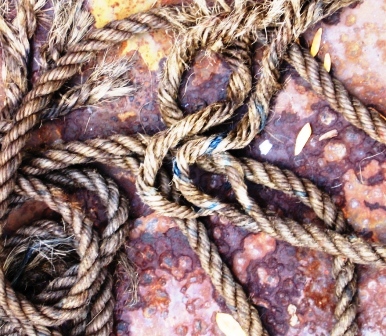
Top photo: Carousel in Queens' Flushing Meadows Park from one of our excursion days this summer. Bottom photo: Ropes and a hose on a ship we visited a few years ago. I like how the coils look organized yet not perfectly so.

Sunday

I didn't do this for academic excellence


When I walked past the local elementary school when my oldest child approached school age, I walked past a gated entrance, security guard, and a fenced-in yard of pavement and no grass. I walked with my children one block past the school to a beautiful, big park where we often spent the day.


 I didn't decide to homeschool because of the academic excellence homeschooling offers. I didn't homeschool because I was afraid of the schools or the people in them. I originally decided to homeschool because I wanted my children outside, not inside with 20 minutes to play on pavement for recess, if the weather was deemed nice enough, and with even less time to eat a lunch.


I wanted them in fresh air, noticing the world around them, moving their bodies, exercising their curiosities, building appetites for food and for learning, and getting tired enough to gladly rest. 

Academics are utterly important to me, too, but they weren't the primary reason I decided to homeschool. I guess I decided to homeschool because I wanted tired and hungry kids. 


I can't and don't want to provide everything for my children, but what I can and want to provide are memories and experiences they will take with them when they leave my side. I found a kindred spirit when I found Charlotte Mason's writing soon after I decided to homeschool. 

Spend time outside, Charlotte wrote. 

It's a habit to want to be outdoors, I think, and Charlotte was real big on habits, too.

Monday

Habits: So I say to you, read!

So I say to you, read! Read! Something will stick in the mind, be diligent and good will come of it. Rev. Thomas Shepard, in a letter to his son, read by me in Sarah Vowell's book The Wordy Shipmates.


For reasons I don't quite understand, I was piling up books to read and then not reading them. It had become a habit - finding good books and not reading.

Earlier this summer I decided to correct the habit and read through my stash of books.


Good thing I started reading, otherwise I might not have recognized Roger Williams when I saw him.


But, since I was in the middle of The Wordy Shipmates when my family took a field trip to the Hall of Fame for Great Americans in the Bronx, I recognized him right away. Okay, I had to read the name plate first, but  it was like sighting a celebrity.

I said, "Hey, I know this guy! This is the Rhode Island guy. He and the other Puritan minister people didn't get along because of theology differences or something like that, and he was banished. They banished him - and he was a Puritan too! Then the one guy - Winthrop? Yeah, Winthrop warned him about something or other. It was winter when he was banished and first he could stay, but then he couldn't. And then Williams started Rhode Island - not right away, but later. I know who he is. Roger Williams! Isn't that so cool?"

My husband said what he usually says after my narrations, "What are you talking about?"

Then my daughter gave a more articulate description of Roger Williams. Turns out she remembers reading about him in This Country of Ours a couple of years ago, and she's way better at narrating than I am. Darn homeschoolers.


I might not have narrated The Wordy Shipmates well, but something from the book stuck in my mind, as Rev. Thomas Shepard told his son would happen if he read.

So I say to you, read! Read!

Wednesday

Habits: reading stash, book 1 done

Carrots, beets, cilantro, basil, perilla, cheese, rhubarb, apple cider, and donuts. The kids and I made a run to the farmer's market this morning.

We settled on the bench to eat the donuts and then the kids ditched me to play in the park. While sitting on the bench, an older woman I think was from China stopped to look at the produce. Without saying a word to me, she opened the bags to get a better look. She didn't notice the basil so I showed it to her and we both took a good whiff of it. I smiled at her and she yelled across the park to another woman in what I guess was Chinese. Then she resumed her walk around the park.

I wasn't particularly surprised about how she boldly examined what I had on the bench. I wasn't surprised because just last night I finished reading Country Driving: A Journey through China from Farm to Factory by Peter Hessler. The American author wrote about similar situations in the book - describing how some of his neighbors in small-town China would enter his home and look at his things without saying a word in greeting.

Maybe I misinterpreted the woman, but I like to think I got her actions right - that she was curious about what I bought, so she looked. I'm not about to adopt her habit as it seems impolite by American culture, but the encounter did connect with my own habit of reading.

I mentioned a few days ago that I'm not reading as much as I should and I'm working on improving my habit. To get back into the routine of daily reading, I'm working my way through a stash that is stacked by my bed, unread. The idea is that I'll pick whatever book is on top and read it - or get rid of it promptly if I don't want to read it. And I told myself I'd make a blog post about each book after I finish it.

Book #1 finished. A very readable book about what's happening in China's countryside in the last decade.

Photo: After the farmer's market, after the donuts, before math, before lunch.

Monday

Look, it's yellow

Learning to see the beauty of nature is, for me, one of the draws of Charlotte Mason's method.


But being in the city, sometimes it's not nature that catches my eye.


The city can seem gray and bleak. It's easy to get down if you see  only gray day after day. It's easy to think that beauty  - or color, or cheerfulness - only comes with a price tag or a trip to Somewhere Else.


But surprises exist.


A mentor once told me to make a list of items - a list of both concrete things and abstract ideas - and then go look for them and keep a record of them. He had a life-time habit of listing, looking, and recording.


He gave me a list that he had made for himself. I read his list, and I thought, "That's so easy."


But I didn't make my own list or look for anything in particular in any specific way. Even so, his idea stayed with me.


And I finally told myself, "It's never too late to learn to look."

Photos: A record of Yellow from (top to bottom) Brooklyn, Manhattan, Manhattan, Staten Island, Manhattan, Bronx, Manhattan. As soon as I get to Queens again, I look for yellow there, too, or for something else.

Saturday

Habits: tangled and stretched

I predicted that my current habit training project would be easy.

The project was to replace checking my email in the morning with stretching in the morning. I predicted it would be an easy transition because it flowed from my previous habit-training of making my mornings more pleasant and productive.

And my predictions were right, at first. Substituting stretching in the morning for turning on the internet in the morning was pretty easy, and my mornings were better for the change.

But what I didn't predict was what the stretching would do to me and where it would lead me.

I expected this

As I stretched my neck and then my feet, I felt tangled inside. My neck made creaking and cracking noises that I've been told is tension. I wiggled my toes and rotated my ankles, and then my legs, my back, my arms, my whole body felt stiff and off-kilter. I expected and welcomed that feeling as part of my habit training, and I felt confident that I can untangle the stiffness in my body by stretching and exercising it
.

I didn't expect this

After I got into the habit of stretching my neck and  my feet in the morning and then into the habit of stretching the rest of my body, I discovered tangles in my brain and in my heart. And, those tangles that I didn't know about now felt like big barriers I could not ignore. If I left the stiffness be, I'd get stuck.

For my brain, I saw clearly that I haven't been using it enough. Just like anything else neglected, my thoughts were getting stiff from lack of use. It's not that I don't use my brain, of course. I use it all the time, but I haven't been using it in new ways, I haven't been stretching my abilities with enough challenges, and I haven't been growing like I should. It felt cruddy to accept that I'm not living up to my potential. That sounds like a dreadful comment from a school report card, doesn't it? "Student is capable, but not living up to her potential."

As I stretched one morning, I knocked over a stack of books by my bedside. I counted as I put the books back into stacks: thirty-one books sitting on the floor next to my bed. They've been sitting there for ages. For Pete's sake, it doesn't take much self-discipline to read....but I've been neglecting my reading habits for too long. It's such a silly thing to neglect reading because I love to read! It's silly and it's embarrassing.

And it's embarrassing how tangled my heart felt, once I started stretching my body and mind. Why didn't I see before that I've neglected my spiritual growth? It now seemed obvious - and painful. Faith is part of my life, but I haven't been nurturing it beyond minimal maintenance, you know what I mean? My spiritual self was getting stiff and inflexible, and that's not okay with me. Once I noticed my neglect, I wanted to scream with disappointment in myself.

I got mail, message delivered

But screaming won't do anything. Working will do something. Paying attention, stretching, opening myself up...those are the things I need to do with my body, mind, and soul.  And I figured that out by keeping the computer turned off in the mornings. I never predicted that would happen.


Top photo: Subway station wall, where an advertising poster should be. 
Bottom photo: Ropes on the deck of a ship docked at a Hudson River pier

Monday

And now it's summer

Last week felt like the last week of school, even though my kids don't go to school and we homeschool year-round. Still, it felt like the final week of something.

I wrapped up a volunteer job I have during the school year, most activities for my kids had end-of-year celebrations, spring sports are almost over, and the weather turned hot and muggy. It feels like a time for change.

After a busy week, I'm just now flipping the page on the calendar to the new month, and I see a bunch of blank boxes. We had planned a long road trip this summer, but we postponed it because of a big change in my husband's workload. Thinking we'd be away, I didn't make plans for staying in the city. But, here it is  June, and here we are in the city, and here I am without a plan.

What to do, what to do

When I mentioned to my neighbor that my kids aren't going to a camp, on vacation, or to summer workshops this year, she said, "But what are they going to DO?!"

I told her we have plenty to do, which is the truth, but it's also the truth that if I don't have some sort of plan, we won't do the things we want to do. I don't want to miss summer - I don't want to miss the easy days that linger for hours and hours into the evening. I also don't want to miss schoolwork as summer is a good time for us to focus. Both the kids and I like doing schoolwork in the summer, though with changes to the routine. But, right now, I don't know what the changes will be.

I can figure it out

I'm sitting here thinking of some goals for the summer. Most of these goals I've talked over with my husband and kids, but I'm making some of them up right now.

* Focus on math and writing. Those two topics will be the priorities, but we'll still do our other studies, too, but on a lighter schedule than during the school year.
* Study Civil War (my daughter's request).
* Habits: include in our studies more handicrafts, poetry, and copywork (everyone's handwriting could use a little improvement, including my own).
* Keep days open for day trips with family. Make a list of the day trips and pencil them on the calendar so I don't forget about them and do something like laundry instead.
* Hang out with friends, not in classes but just for fun.
* Go to the Farmers Markets in the neighborhood - can't wait!
* Go to the many, many free theater events in the city. (This is mainly for my daughter and me as my son and husband aren't interested most of the time. They'd rather go fishing.)

That's it. That's our plan for the summer.

Photo: I saw the sunlight hit the weeds growing on top of a wall this morning.

Tuesday

Habits: train hard, fight easy

I spend time at the dojo. A lot of time.

Little do the martial arts sesei know that the mom stitching handicrafts or reading a book in the corner - that would be me - considers the classes as homeschooling teacher lessons. While the sensei are training the students on the mat, they are also training me.

Of the many lessons I learn, one is the value of practicing something over and over and over again. On the mat during warm-ups and during lessons, the students practice movements over and over and over again, until their bodies have memorized the movements and their brains don't have to think about how to make them. The brain is then free to think at a higher level, such as thinking strategically, and the body is conditioned to do the work required.

One tough-guy sensei tells the students when they are training, "Train hard, fight easy!" And he says, "Train easy, fight hard!" And then he says, "Drop and give me 25 push-ups!"

He means that if the students prepare hard for a tournament, the tournament will be easy. But, if they train easy, they won't be prepared and the competition will be very hard for them. Training is emphasized, training is essential.

Maybe it's a stretch, but that sounds like Charlotte Mason habit training to me.

At first a habit is hard work and takes a lot of determination of body and mind, but once you have the actions ingrained in your day, the work is easy and you don't have to think about it anymore. And if you don't have good habits, as I learn over and over again, the work remains a struggle and your brain is stuck having to think about it too much.

Like in the martial arts - or in anything else - training leads to improvement. And improvement feels great. You don't need any reward other than that good feeling, but sometimes it's hard to remember that good feeling in the midst of the hard work of habit training.

When I feel myself slacking off my habits and when I'm tempted to let things slide, I remind myself, "Train hard, fight easy!" And then I drop and do 25 push-ups.

Just kidding about the 25 push-ups.

Photo: One of my favorite inspiring views. It's such an enjoyment to watch others work hard, isn't it?

Habit training: email and a pain in the neck

I didn't check email this morning, and I didn't plan it that way.

My current Mom Habit Training Project is about improving my morning routine. Now that my mornings are going well, I'm noticing little habits that get in my way. Checking email has started to feel like tedious busywork to me, and the risk of spending morning time caught in the online web isn't worth the benefits anymore.

Don't get me wrong, I like my laptop and internet connection, and I love email. I can't imagine how much harder it would be to homeschool without this great resource available and easy-to-use. But, it comes with the price of being too available and it's too easy to whittle away the time. I knew this price, but didn't really feel it until my mornings started going so nicely. Nice mornings take time and attention, and giving my time and attention to my email inbox can't compete anymore, not in the morning.

Again, I'm not knocking the net. I'm not dumping the computer, but I'm dumping the daily "I'm just gonna check my email for a sec" routine in the morning.

I didn't plan this to be my part of my current Habit Training, but it slipped in on its own. What I actually planned to work on next was to increase my physical flexibility by stretching my body in the morning.

I've been feeling neck stiffness lately, and stretching my neck and back and arms to alleviate the discomfort feels really good. I know I need to stretch the rest of my body, too, but (as is common with me),  I forget to do it.

So the plan, which I started this week, is to replace morning email with stretching. I already feel like the habit is in place, and I hope I'm right that it will be an easy habit to maintain.

Photos: Pretty blossoms I've seen recently in a park in the Bronx. They have nothing to do with the post topic, but are simply photos of scenes I like.

Thursday

Okay, I stray: math, part one

I confess I don't know much about what Charlotte Mason says about math.

When I come to sections about math in her writings, I skim them and then hurry along to topics that interest me more. I'm perfectly competent in math, but I'm not crazy about it.

now it's working...
It was easy to do mathy things with my kids when they were younger. We counted together, sorted socks and silverware, found patterns, played dominoes, and set up shops with a cardboard box for a cash register. Then I started doing formal math instruction with my daughter, and it was fun at first.

...now it's not
Somewhere around age 10, my daughter and I started struggling with each other during math. In response, I began blowing off math lessons, but doing math occasionally instead of daily frustrated her all more. When she announced she didn't like math, I knew I had to change the situation.

I didn't know what the problem was, but I didn't want to encourage any notion that she wasn't good at math, and I definitely wanted to discourage a habit of the two of us fussing with each other over a school subject. While I don't know much about what Charlotte says about math, I do know what she says about habits and relationships, and I set aside the math books while I re-grouped.

To be continued....

Photo of early childhood treasures: bottle caps collected and sorted in a city park. As little kids, mine knew which beer brand was the most popular in various neighborhoods based on the caps they found in the parks. How lovely.

Monday

Sign of success

My husband took the day off work today to go hiking with the kids.

When getting ready for the outing this morning, my 12 year-old daughter packed her nature journal and pencils in her backpack.

I realized today that nature journaling has become a hobby for her, rather than an assignment from mom, and that development is fun for me to see.

I mentioned to my husband that she was bringing her sketching supplies, and he said, "I'd better bring mine, too." (He started a nature journal long before I did, long before we had kids or knew about Charlotte Mason. I give him lots of credit for setting the example for the rest of us.)

My son, in turn, packed a baseball, mitt, soccer ball, and Frisbee.

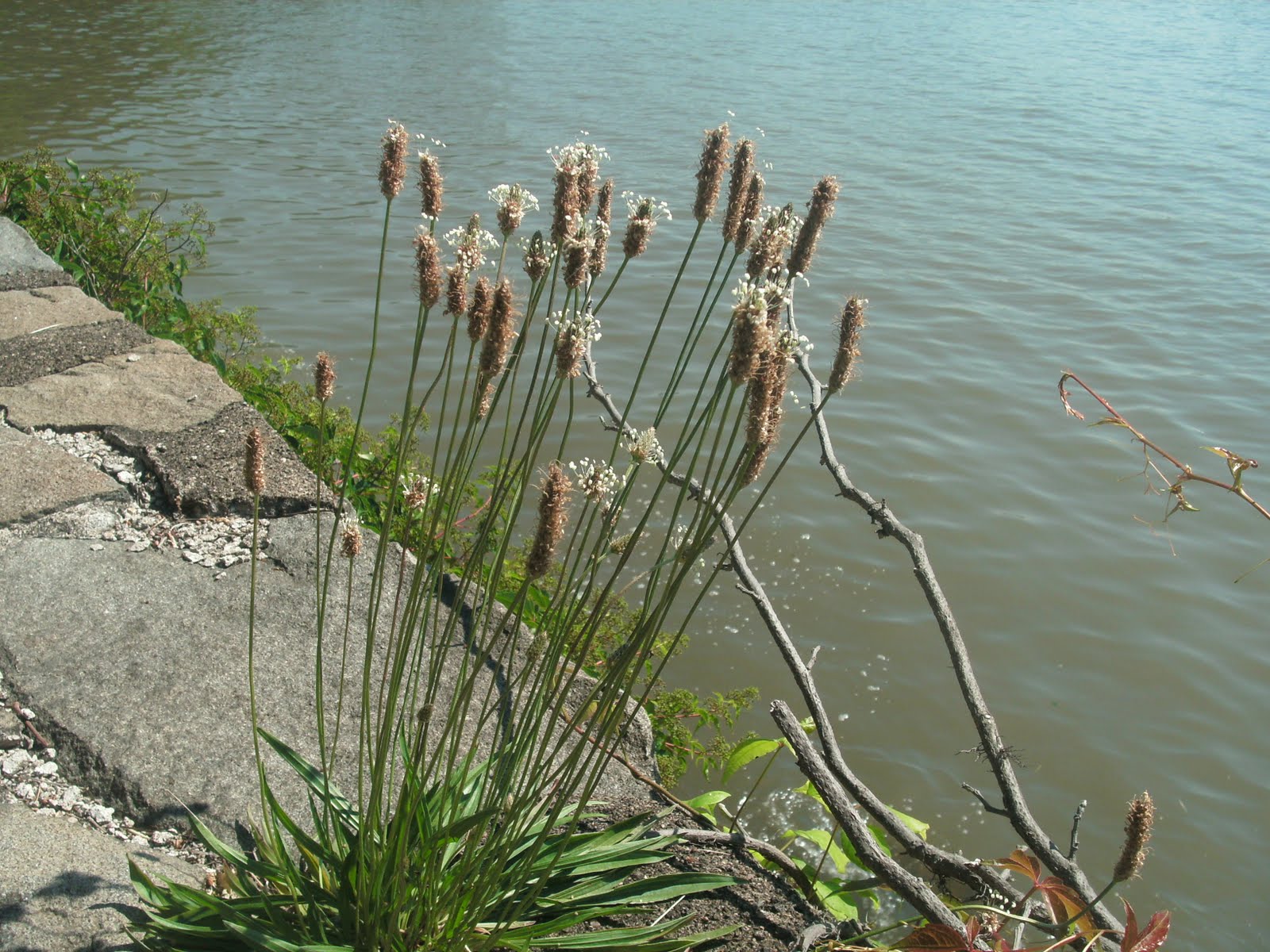
Photo: English plantains growing along the Hudson River.